

The signs that often arrive years before anybody says the word, and what helps.

By Pranav Raut, postpartum coach for NRI mothers.
The short answer
Weight loss with PCOS can be harder than average, but it isn’t impossible. What the evidence supports is fairly plain, and a good deal less exciting than the internet suggests.
Modest weight loss improves symptoms for many women, including cycle regularity. No single named diet has been shown to be clearly better than the others. Resistance training improves insulin sensitivity. And the medical side, whether that’s metformin, inositol, hormonal treatment or something else, is your doctor’s decision, not a coach’s.
The part that often gets missed
PCOS is often diagnosed slowly. Weight creeps up, cycles become irregular, and eventually, sometimes after a pregnancy, a scan and some blood work arrive at the word PCOS. For many women it’s the first time anybody has used it.
Go back through the history and there are often signs, years earlier, that pointed at how the body was handling insulin. Nobody joined them up, because each one on its own looked like nothing.
How insulin and PCOS relate is stated online far more confidently than the science allows. Insulin resistance is a core feature in a large proportion of women with PCOS, and high circulating insulin does appear to drive the ovaries to produce more androgens, which is part of what produces the symptoms. But PCOS also has genetic and developmental components, and insulin resistance isn’t established as the trigger in every case.
It’s better described as a cycle than a chain. Insulin resistance and the hormonal picture of PCOS reinforce each other, weight gain makes both worse, and the worse they get, the harder weight becomes. Where the cycle started differs from woman to woman.
The practical consequence is the same either way: if you work on the insulin side, you tend to improve things on the other side too. That’s why the recommendations below look the way they do.
The signs worth knowing
These are worth raising with your doctor, particularly in combination.
Darkened, velvety patches of skin, usually at the back and sides of the neck, in the armpits or in the groin. This is called acanthosis nigricans, and it’s strongly associated with insulin resistance. It’s often mistaken for dirt or tanning, and scrubbing doesn’t shift it.
- Skin tags. A frequent finding alongside the patches, and associated with the same thing.
- Irregular or absent periods.
- Excess hair growth on the face or body, or thinning hair on the scalp.
- Tiredness that doesn’t match what you did that day.
- Difficulty losing weight on an approach that works for other people.
Two deficiencies also show up often enough in this group to be worth testing for specifically: vitamin B12 and vitamin D. Both are common in Indian women generally, both make fatigue worse, and B12 deserves particular attention if you’re on metformin, since long-term use is associated with lower B12.
One thing I’ll correct, because it appears on a lot of PCOS symptom lists and doesn’t belong there. A raised fatty pad at the base of the back of the neck isn’t a recognised sign of insulin resistance. It’s associated with other things, including some conditions involving cortisol, so mention it to your doctor instead of filing it under PCOS and ignoring it.
What the evidence supports for weight loss
Modest weight loss helps, and it doesn’t take much. Improvements in cycle regularity and metabolic markers have been reported at relatively small percentages of body weight, so you don’t need to reach a goal weight to feel a change.
No single diet is the answer. Low carbohydrate, Mediterranean, high protein, low glycaemic index: when studies compare them at matched calories, the differences are far smaller than the marketing suggests, and what matters most is whether you can hold it. If somebody tells you there’s one PCOS diet, they’re selling something.
Protein and fibre do real work here because both help with fullness, and satiety is a bigger part of this problem than most plans admit.
Resistance training is the underrated piece. It improves insulin sensitivity, and it’s the part most PCOS advice skips in favour of cardio. Muscle is metabolically useful tissue, and building it is one of the few things you can do that changes how your body handles glucose over time.
Walking and general daily movement matter at least as much as structured cardio sessions.
Sleep matters, which is a hard thing to say to a mother with a baby. Take what you can get, and stop treating the next day’s hunger as a personal failing.
Medication is your doctor’s call. Metformin and inositol both come up in this conversation, but both are decisions for a doctor who has your reports, and neither is something to start because an article mentioned it.
If you’re postpartum with PCOS
Two things apply here.
First, if you had gestational diabetes, your follow-up glucose testing isn’t optional. Women with PCOS are at higher risk of gestational diabetes and of later type 2 diabetes, and the postpartum months are the window in which it’s worth staying on top of it.
Second, the order I use with postpartum mothers still applies: recovery, then blood work, then the plate, then movement, then fat loss. PCOS doesn’t change the order. It asks more patience of you inside it, and it makes the blood work step more important.
What to ask for at your appointment
- Bring this list rather than a self-diagnosis.
- Fasting glucose and HbA1c, and ask whether a fasting insulin or an oral glucose tolerance test is appropriate for you.
- Thyroid function, because thyroid problems produce overlapping symptoms and are common in Indian women.
- Vitamin D and vitamin B12.
- A lipid profile.
The hormone panel your doctor considers appropriate, which is their call, not mine.
Then ask the question that matters: given these results, what’s realistic for me, and what should I be doing first?
What I wouldn’t do
Skip any PCOS diet you found online that removes entire food groups. The evidence doesn’t support one approach over another, and the restrictive ones are the ones you abandon.
Don’t start a supplement because a reel recommended it. Inositol in particular gets discussed as though it were a food, and it’s a decision for your doctor.
“Lose some weight” isn’t advice unless someone tells you how, and it’s what many women with PCOS are handed.
And don’t judge progress by the scale alone. Water fluctuations make weekly weighing misleading, so go by measurements and how your clothes fit.
Frequently asked questions
Can PCOS be cured?
No, and be cautious of anyone who uses that word. Symptoms can improve considerably, and many women manage PCOS well for years. That’s a different claim, and an accurate one.
How much weight do I need to lose to see a change?
Less than most women expect. Improvements have been reported at modest percentages of body weight, so start there rather than at a goal weight.
Is a low-carb diet necessary?
Not necessarily. It helps some women, largely because it helps them eat less without feeling deprived. If it suits you, use it. If it doesn’t, the evidence doesn’t require it.
Why is my weight so stubborn compared to my friends?
Insulin resistance changes how your body handles glucose and can make the process slower. Slower isn’t impossible, and the comparison with your friends doesn’t help you.
Does PCOS affect breastfeeding?
Some women with PCOS report supply difficulties. If that’s your situation, a lactation consultant is the right person to see, and the sooner the better.
The one line to take away
With PCOS, the work is protein, fibre, resistance training, daily movement and patience, with a doctor who has seen your actual numbers. A special diet is rarely the missing piece.
Where to go next
Parent Fitness Coach on Instagram carries our latest postpartum guidance and the experiences of the mothers we coach.
Follow on Instagram: Click Here
If you’d like the general postpartum method written down while you wait for your results, How to Get Your Pre-Pregnancy Body Back in 90 Days has the blood work checklist to take to your appointment, the Indian food chart and the twenty-minute home workouts.
Get the ebook: Click Here
PCOS is the clearest case for not working from an article. What’s right for you depends on your reports, your symptoms, your medication and where you are postpartum, and none of that is visible from here.
You can book a one-to-one consultation call. Bring your blood work, including anything from your pregnancy.
Book a one-to-one call: Click Here
Mothers describe their experience in their own words in this video interview series.
Watch the interviews: Click Here
About the author
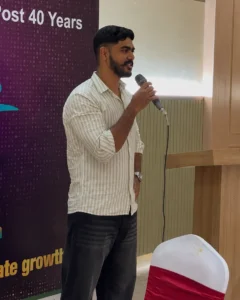
Pranav Raut is a postpartum coach for NRI mothers and the founder of Parent Fitness Coach and the Reverse Fat System. A certified nutritionist, he has spent six years in the postpartum space and coached more than 1,000 working mothers, including NRI mothers in the USA, Canada, the UK, Switzerland, Iceland, Singapore, Doha and Dubai.
Sources
- Acanthosis nigricans and its association with insulin resistance: DermNet NZ https://dermnetnz.org/topics/acanthosis-nigricans
- Gestational diabetes prevalence in India, ICMR-INDIAB national study https://pmc.ncbi.nlm.nih.gov/articles/PMC12744553/
This article is for education and is not medical advice. Do not ignore the advice of your healthcare professional.